

PCAPS well represented at the 3rd WMO WWRP Weather & Society Conference
From 23-26 February 2026, WMO WWRP’s Societal and Economic Research Applications working group (SERA), organised its third Weather & Society Conference. The online conference gathered a global audience under the theme ‘Whole of Society Approaches for Weather-Ready Communities’. PCAPS was well represented, with Steering Group members both chairing sessions and giving presentations.
The 3rd Weather & Society conference, organised by the WWRP SERA working group.
A global and transdisciplinary gathering
The Societal and Economics Research Application (SERA) Working Group of the World Weather Research Programme (WWRP) of the WMO has been organising the Weather & Society Conference since 2022. The main objective of the W&S conferences is to bring together the NMHSs community, the scientific sector and user communities to reflect on case studies and practice which will contribute to the achievement of the goal of Early Warnings for All.
This third edition of the conference was a true global gathering. There were over 380 people from all 117 different countries who attended the conference. A total of 56 speakers from 26 countries and from all continents presented their work throughout the different sessions.
Five themes to address whole of society approaches for weather-weady communities
The third edition of the conference included five sessions of four hours, each with a different theme. The first session focused on effective communication of weather and sub/seasonal warnings through visual clarity, language accessibility, uncertainty messaging, and diverse dissemination channels in support of the Early Warnings for All initiative. The second session explored transdisciplinary science in weather services, focusing on co-production, forecasting, risk reduction, governance, communication, and equitable access to information. In the third session, presentations focused on case-based applications of quantitative surveys and other methodologies, including post-event surveys, longitudinal surveys, and research that examines how survey insights strengthen NMHS’ role as responsive and relevant authorities within weather-ready societies. The fourth session explored how gender, youth, and social inclusion impact access to weather information, emphasising the importance of empowering disadvantaged individuals to improve the effectiveness of early warning systems. In the fifth and final session, focus was on the intersection of AI technology in weather prediction and social science research, on fostering dialogue on the societal implications of the emergence of AI in warning services, and on exploring opportunities for inter- and transdisciplinary research collaborations around AI technology in weather forecasting and communication. All of these topics are clearly relevant also for the Polar regions, and for advancing Polar science for services.
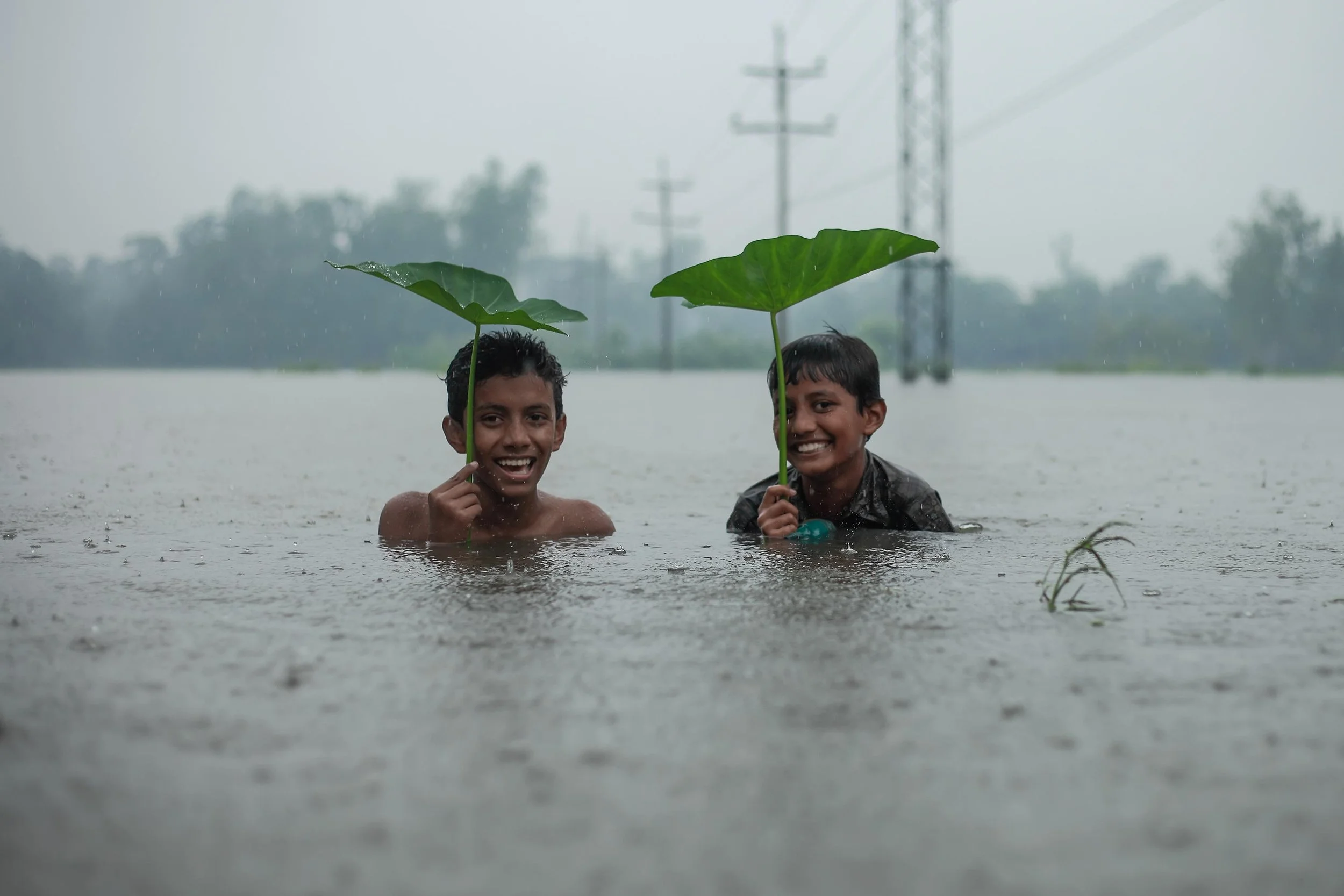
“Enjoy the Rain” - WMO 2022 Calendar Competition. Image credit: Muhammad Amdad Hossain.
Representations from the PCAPS Steering Group
The PCAPS Steering Group was well represented through presentations from Vicki Heinrich and Machiel Lamers, as well as through chairing of the third session by Machiel and the fifth session by Jelmer Jeuring. In addition, Jelmer was also a member of the planning committee of the conference.
The third session, chaired by Machiel Lamers (WUR) and Carla Mooney (BOM) was dedicated to the challenges of collecting user insights. How do surveys provide applicable insights to National Meteorological and Hydrological Services? The session brought together speakers from across the world, addressing opportunities and challenges of different methodologies for collecting user insights, processes of improving user-specific services, and challenges of reaching and engaging user-communities. Overall, the session showed the importance of various social science methods and theoretical approaches on the production and use of meteorological services across different contexts.
This session included two presentations from PCAPS members. Machiel Lamers presented on behalf of the PCAPS Horizon Scan team the key results of their work. Through the Horizon Scan, a broad survey method, the authors engaged with polar operators, researchers and other key stakeholders, to systematically identify and prioritise key scientific questions within the social and behavioral sciences and humanities that are critical to improving the relevance, actionability and impact of polar environmental forecasting services. The questions focused on the most significant challenges regarding the improvement of polar forecasting, as well as the critical bottlenecks and the key societal outcomes. The survey generated responses from a relatively small (n=66) but highly experienced group of experts spanning the two polar regions, including academics, national polar programmes, MET institutions, tourism, shipping, emergency services, and fisheries. Observation and monitoring are recognised as the key challenge to improving environmental forecasting in the polar regions, as well as funding and resourcing, and understanding contextual constraints. Safety, resilience and better decision making are seen as the most important positive societal outcomes, while increased exploitation, access and anxiety are seen as potential negative outcomes. The Horizon Scan team is currently in the process of writing up the results and building a second survey that will likely be launched in the course of this year.
Then, Vicki Heinrich (BOM) gave a presentation about a project that aimed to systematically collect baseline insights about use of Bureau of Meteorology’s public warnings, weather hazard exposure, risk perception, information value and information preferences. Vicki’s presentation discussed how and why the American Severe Weather and Society Surveys, developed in the USA by the University of Oklahoma, were adapted to the Australian weather service and warning context. She emphasises how this project provided a strong foundation for the small in-house Social Science team at the Bureau to tailor the instrument by using local research to ensure the measures were reliable, relevant, and culturally appropriate. This approach strengthened in‑house social science capability while preserving resources for survey delivery, though it also brought challenges around ethics, representative sampling, data analysis, and how insights are best applied. Early findings highlight the crucial role of Bureau services and warnings, and provide indications on areas for improvement to better enhance societal outcomes during extreme weather. Finally, it was emphasised that there is a need for on-going funding to collect longitudinal data to track changes over time and evaluate the impact of policy and service changes. These points are certainly also relevant for understanding the use of forecast information services in polar regions.
In the fifth and final session, the conference touched on the intersection of AI technology in weather prediction and social science research. This session was co-chaired by PCAPS SG member Jelmer Jeuring, together with Julie Demuth from NSF NCAR. An important topic discussed was trust and trustworthiness. It was highlighted that trust should rather be attributed to the people using AI, and their intentions with its use, than to the technology itself. A related factor was discussed by Sally Potter, member of the WWRP SSC. She pointed to potential privacy concerns around AI-supported personalised forecast information services. Next to these more foundational questions, the session also included several examples of implementation and operationalisation of AI-based forecasting tools, such as about a machine learning-enabled early warning system in Nigeria and an AI-supported decision support tool for emergency management in the USA. A key aspect in many of these examples was the importance of inter- and transdisciplinary collaborations, to adequately address the complexity of embedding AI-technology for use in a given decision context.
Overall, the active involvement of PCAPS Steering Group members throughout the conference underscores their strong engagement with global efforts to advance the application of social science for the benefit of weather-ready communities. Through their contributions they will also continue to inform and inspire interdisciplinary approaches to improve polar forecasting and services.