

Antarctic Science at the 2026 Australian Meteorological and Oceanographic Society Conference
The Australian Meteorology and Oceanography Society (AMOS) 2026 conference in Hobart, Australia brought together Antarctic oceanographers, glaciologists, meteorologists, climate and social scientists to share their research and explore the interconnected processes shaping the Antarctic climate system and its global implications.
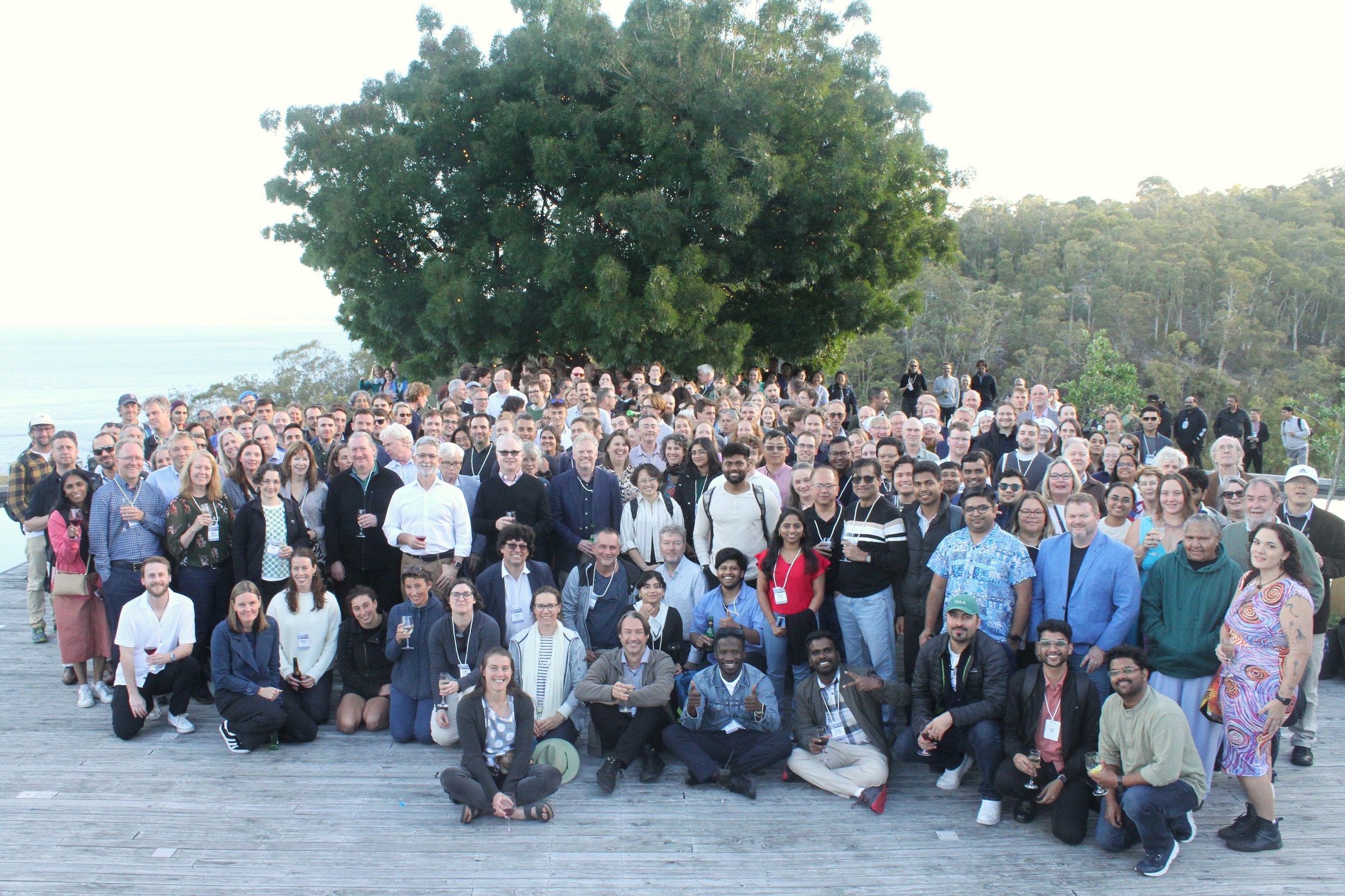
AMOS 2026 Conference dinner attendees. Photo credit: Nancy Van Nieuwenhove
The AMOS annual conference 'Southern Skies, Southern Seas: Science on the edge' was held in Hobart, Tasmania in February this year. The week‑long conference, attended by more than 400 delegates from universities, government, and industry, showcased the science that underpins the forecast, warning, and climate services Australian and Southern Ocean communities and industries rely on. The sessions included climate change and variability, extreme weather, compound events, hydroclimate, evolving oceans and coasts, energy sector challenges, the rapidly advancing applications of AI and machine learning, and Antarctic climate, ice and ocean.
Antarctica and the Southern Ocean are experiencing rapid, unprecedented change—from heatwaves and atmospheric rivers to extreme sea ice decline and accelerating ocean warming. The AMOS 2026 Antarctic session provided a full day of presentations, focusing on interactions, extremes, teleconnections and change. Topics included interconnected atmosphere–ocean–ice processes, cloud properties, sea ice, icesheet dynamics, extreme weather, marine heatwaves, Southern Ocean circulation, and key feedbacks and teleconnections. Contributions from recent field campaigns, understanding user weather forecasting needs, climatological reanalyses to inform operational planning, and insights into data and satellite observational needs were also discussed.
Key notes included understanding changes in Antarctic Bottom Water from Dr. Annie Foppert at the University of Tasmania, Antarctic ice cores and how they are used as archives to understand Southern Hemisphere climate variability by Dr. Tessa Vance (Institute for Marine and Antarctic Studies, University of Tasmania, Australian Antarctic Division, Australian Antarctic Program Partnership) and an historical overview of advances in the role of Antarctic sea ice in the global climate system by Dr. Ian Alison (Institute for Marine and Antarctic Studies, University of Tasmania). Dr. Nerilie Abram, the new Chief Scientist at the Australian Antarctic Division, presented on the Australian Antarctic Science Decadal Strategy in a plenary panel session on the future of weather, climate and ocean science in Australia.
To learn more about the conference, see the latest AMOS Bulletin (BAMOS) article or the conference website.