

Register for webinars: The impact of environmental forecasting services in Svalbard and beyond
On October 19-20, 2026, the PCAPS Sustainability and Impact Task Team will organise two webinars and a workshop in Oslo, titled: “The impact of environmental forecasting services in Svalbard and beyond.” The sessions are funded by the Research Council of Norway and are a collaboration between a range of organisations, including Nord University, Wageningen University & Research (WUR), the Norwegian Meteorological Institute (MET Norway), the University Centre in Svalbard (UNIS) and the Association of Arctic Expedition Cruise Operators (AECO).
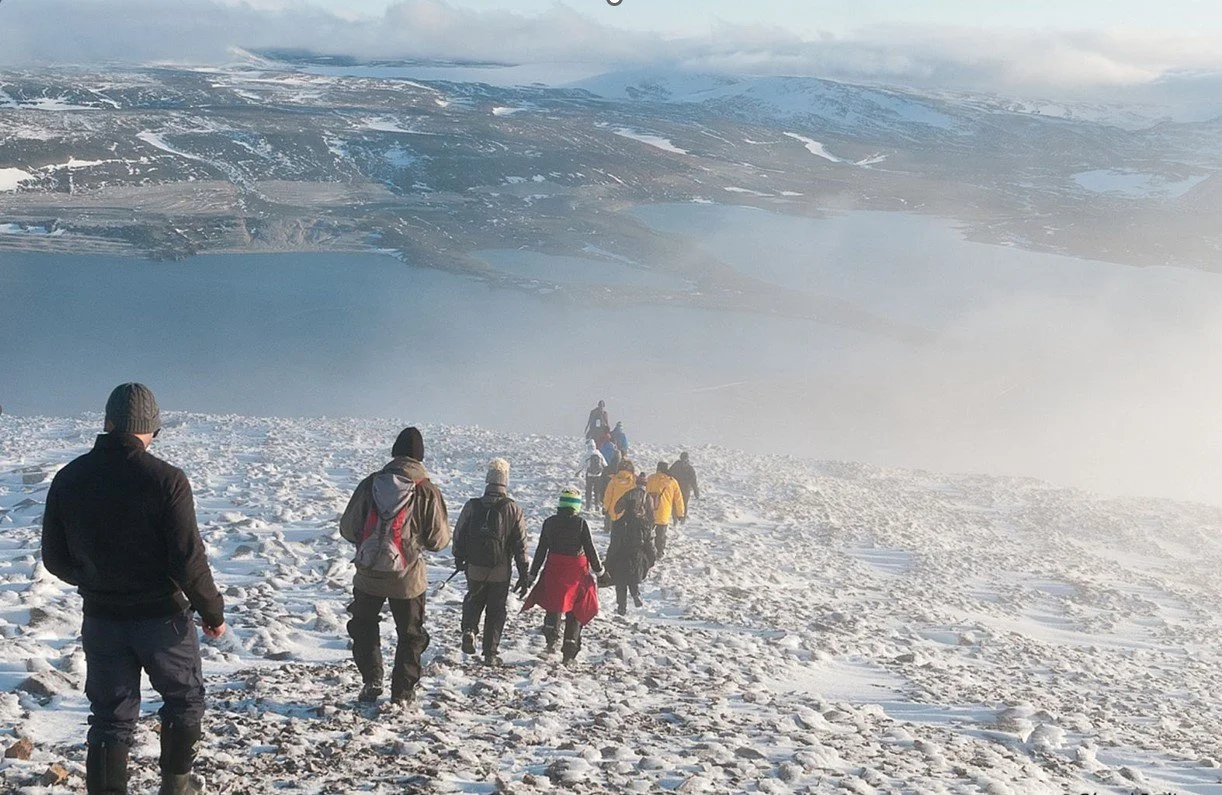
Svalbard in the fog. Photo credit: Machiel Lamers
During the two webinars, several experts and tourism stakeholders will present on the importance and latest developments in weather and ice forecasting, as well as the various impacts and implications of these forecasts on Svalbard’s society, tourism sectors and activities.
Here is our line-up:
Monday 19th October, 9:20 – 11:00
Prof. dr. Machiel Lamers (WUR): “Setting the stage for exploring the impact of forecasting in the Arctic”
Dr. Marius Jonanssen (UNIS): “Observations and opportunities for improved forecasting”
Dr. Penny Wagner (MET Norway): “The impact of enhanced sea ice forecasting services”
Tore Hoem (Hurtigruten, Svalbard): “Svalbard operations in the context of forecasting of sea ice- and weather-related conditions”
Leoni Dickerhoff (AECO): “Environmental forecasting needs and use from an operational context”
Tuesday 20th October, 9:30 – 11:00
Ine-Therese Pedersen (MET Norway): “The impact of weather forecasting in Svalbard: A forecaster’s perspective”
Dr. Jacub Taarup (UiS, DK): “That which attacks you: Exploring the role of the forecasting services during piteraq storms on the east coast of Greenland”
Dr. Dewan Ahsan (SDU, DK): “Sustainable Arctic cruise tourism: The Svalbard case”
Prof. dr. Machiel Lamers (WUR, NL): “On thin ice: Biophysical volatility and the limits of absorptive capacity in climate-sensitive high Arctic tourism”
The two webinars are part of the programme of a larger workshop organised in Oslo on these two days, that also include dedicated discussions on the current and future impacts and implications of environmental forecasts between information providers, the tourism industry and academics. Svalbard is a particularly interesting case, as tourism activities are increasing and are impacted by changing weather and ice conditions. The experiences and lessons learned there can help improve forecasting services in other remote and polar regions. The goal is to better understand the connections between these groups, to explore the opportunities and challenges of forecasting services in the future, and how we can collaborate across information providers, the tourism industry and academia to address these.
To register for the webinars, please send you name, e-mail and affiliation to Marta Terrado, and you will receive a link for the webinars.
Are you interested in joining the entire workshop to contribute to these discussions in Oslo on the 19th and 20th of October?
We have a few spots left in the room! Please contact Machiel Lamers for more information.