

PCAPS participation in the CliC Conference and the EC-PHORS meeting
Hanne Nielsen, Daniela Liggett and Pranab Deb from the PCAPS Steering Group participated in the Climate and Cryosphere (CliC) Open Science Conference 2026 (CliC 2026) in Wellington, New Zealand. The conference brought together researchers and practitioners to discuss how rapid cryospheric change is reshaping polar and high-mountain regions and how the CliC community can contribute to the Fifth International Polar Year (IPY-5, 2032-33). Daniela also attended the WMO Executive Council’s Panel on Polar and High-mountain Observations, Research and Services (EC-PHORS) meeting, which was held alongside the conference to explore how best to coordinate observations, research and services in these vulnerable regions, including planning WMO’s contribution to IPY-5.
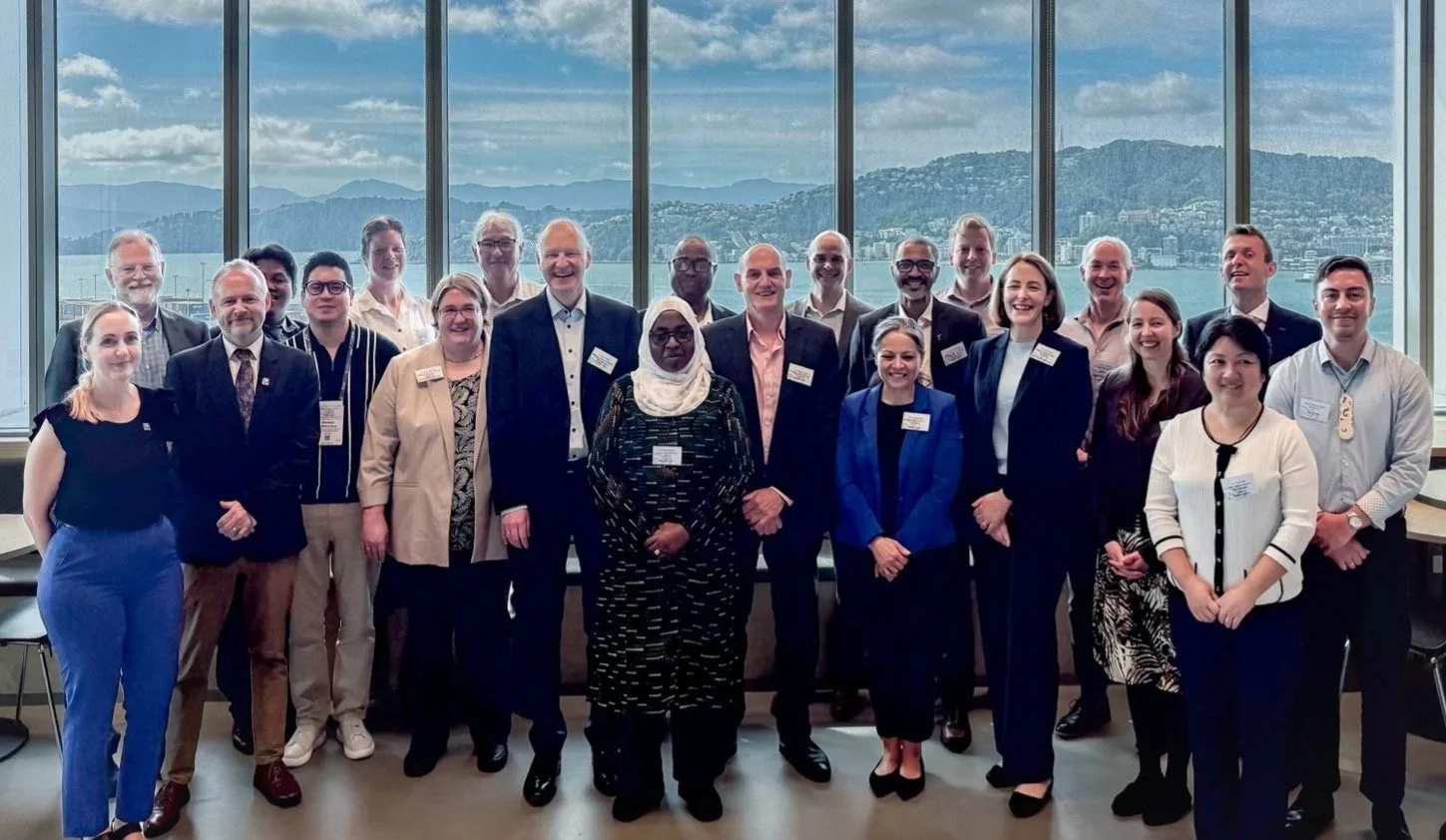
The PHORS meeting participants posing for a photo team at their meeting venue in Rutherford House, Victoria University of Wellington, overlooking Wellington harbour. Photo credit: Neil Gordon
At the CliC conference, we presented early results from the PCAPS Horizon Scan, an initiative led by the PCAPS Services & Actionability and Impact & Sustainability Task Teams to identify key social and behavioural science questions needed to improve polar environmental forecasting services. Drawing on an open-ended survey of polar operators, forecasters, researchers and policymakers, we asked participants to describe the most significant challenges and bottlenecks in improving environmental forecasting in the Arctic and Antarctic, as well as the societal outcomes that might follow if services were strengthened. Responses highlighted that, while data gaps and model limitations remain important, many of the most critical barriers lie in human and institutional domains, including communication across disciplines, trust in forecast products, and the alignment between user needs and available services along the forecast value chain.
The Horizon Scan, much like the CliC conference itself, showcased the vibrancy provided by bringing physical scientists, social scientists and humanities scholars together. Being held in Aotearoa New Zealand, the CliC conference also featured a strong and inspiring presence of Indigenous voices, with storytellers and researchers from different Māori iwi (tribes) sharing how their livelihoods and culture have been affected by cryospheric change.
The EC‑PHORS meeting provided an opportunity to bring PCAPS to broader WMO strategic discussions, including how to narrow observing gaps in the cryosphere, better include Indigenous knowledge, and avoid duplication with external initiatives. One of the sessions focussed specifically on how WMO can advance cryosphere priorities through IPY‑5. Looking ahead to IPY‑5, the Horizon Scan outputs will help to ensure that social and behavioural science questions around communication, governance, equity and lived experience as well as operational decision-making are embedded alongside physical science priorities from the outset.
By clarifying research needs around trust, risk perception, decision-making and the societal implications of improved forecast services, PCAPS can act as an important strategic bridge between current cryosphere initiatives and the more ambitious, integrated polar research effort envisioned for IPY‑5.