

ArcRCC-N organised its 17th Arctic Climate Forum
The 17th session of the Arctic Climate Forum (AFC-17) took place virtually on June 9-10, 2026. The meeting was hosted by the Arctic Regional Climate Centre Network (ArcRCC-N) and hosted by the Norwegian Meteorological Institute, in collaboration with the World Meteorological Organization (WMO). PCAPS SG member Jelmer Jeuring was responsible for the planning and implementation of ACF-17.
The official Arctic Climate Forum logo.
Source: Arctic Regional Climate Centre Network
About the Arctic Regional Climate Centre Network
World Meteorological Organization (WMO) Regional Climate Centres (RCCs) are centres of excellence that operationally generate regional climate products including climate monitoring and prediction in support of regional and national climate activities and thereby strengthen the capacity of WMO members in a given region to deliver better climate services to national users. While all WMO RCCs are required to fulfil certain mandatory functions, the RCC concept includes flexibility to accommodate specific regional needs, capabilities and limitations. The Pan-Arctic RCC Network (ArcRCC-N) is based on the WMO RCC concept with active contributions from all the Arctic Council member countries through a mutually agreed structure consisting of three sub-regional geographical nodes: Asia, Nordic/Europe and North America. Each Node performs mandatory functions for the countries in its domain and, additionally, undertakes a significant cross-node mandatory function for the entire pan-Arctic domain. An overview with key information about the ArcRCC-N and its member countries and institutions is found here.
ACF-17 is a Pan-Arctic platform for dialogue about seasonal conditions and climate change
The Arctic Climate Forum is a flagship activity of the ArcRCC-Network, following the Regional Climate Outlook Forum (RCOF) concept supported by WMO and its partners around the world. ACFs are held twice yearly in the (northern hemisphere) spring and fall. The first session of ACF took place in 2018. This 17th edition of the Arctic Climate Forum was held online over two sessions on 9-10 June, with each session gathering around 50 participants, consisting of climate researchers, operational forecasters, Indigenous and local community representatives, and stakeholders from public and private sectors from across the Arctic.
The central topics of ACF-17 were a recap of the 2025-2026 winter season and a look ahead to the summer months for 2026. In particular, the Regional Overview Briefings presented on Day 1 by representatives from various partner institutes, provided insights in temperature, precipitation and sea-ice conditions. An overview of extremes and socio-ecological impacts as they occurred in the past winter season were also included in these presentations.
On Day 2, presentations went more in-depth. For the past season, observed values for a range of climate variables (atmospheric patterns, temperature, precipitation, sea-ice, polar ocean, land hydrology and bioclimatic indices) were addressed. Presentations were given about the seasonal outlooks for temperature, precipitation and sea-ice, which included assessments of quality and confidence. These presentations are important to provide the audience with information about the degrees of (un)certainty that are inherent to seasonal forecasting. More detailed information can be found in the ACF-17 Consensus Statement (see below).
During the two sessions, significant time was also dedicated to presentations from stakeholders. On the first day, Harald Schyberg from the Norwegian Meteorological Institute gave a presentation about the new pan-Arctic reanalysis data set CARRA2 (see also this PCAPS blog post). On the second day of ACF-17, two stakeholder presentations were given that highlighted how seasonal changes are related to ecological impacts. Marc Macias-Fauria from the Scott Polar Research Institute in England presented research findings that show how extreme climate events have (mostly negative) impacts on different Arctic biota. Then, Nigel Yoccoz from UiT The Arctic University in Norway presented about the COAT framework (Climate-ecological Observatory for Arctic Tundra). He highlighted how different weather and climate data are used in this framework to support policy and ecosystem governance in Norway.
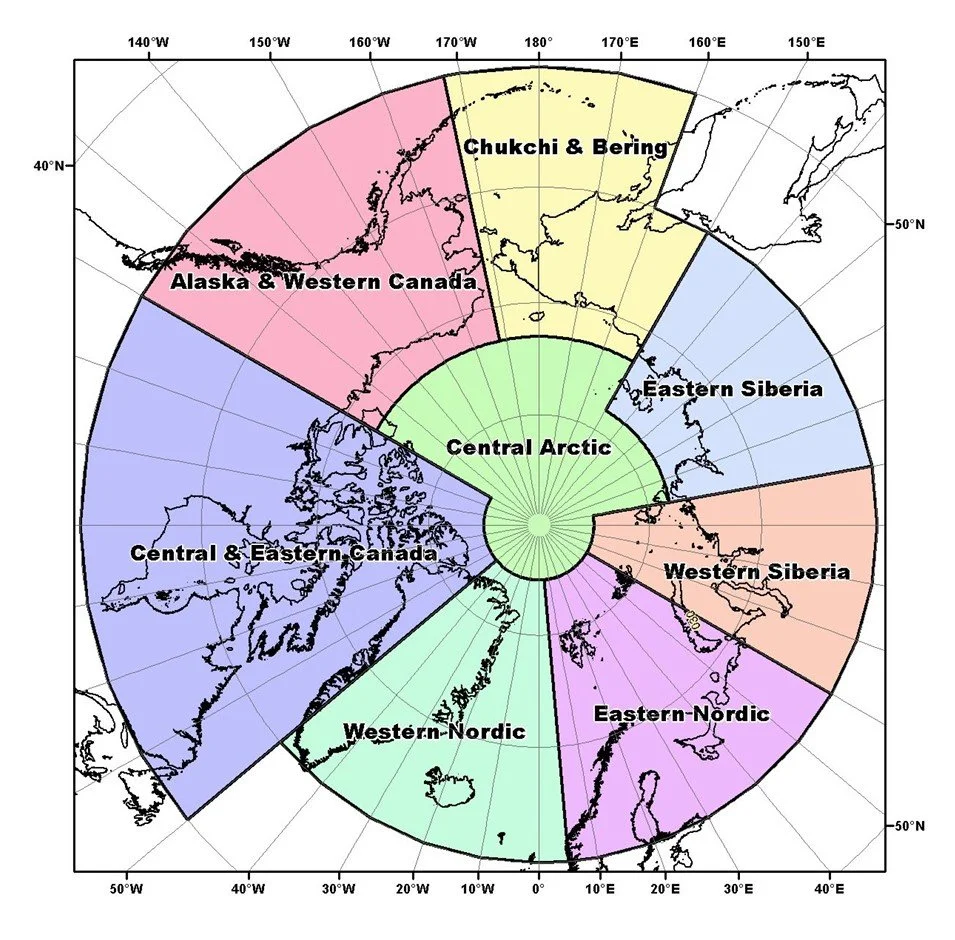
ArcRCC-N regions accepted for seasonal summaries and outlooks. Source: Arctic Regional Climate Centre Network.
The ACF-17 Consensus Statement
A main product of the ACFs is the Consensus Statement, which synthesizes observations, historical trends, forecasts, and in doing so, includes regional expertise from respective institutions involved in ArcRCC-N. These statements include a review of the major climate features of the previous season and outlooks for the upcoming season for temperature, precipitation, sea-ice and several other experimental forecasts, covering the various regions and countries across the Arctic.
Want to know more? The (draft) Consensus Statement of ACF-17 can be found here. The presentations of both Day 1 and Day 2 of ACF-17 will also be posted here. The next ACF (ACF-18) will be organised in late October / early November 2026.