

A workshop on the impact of environmental forecasting services in Svalbard and beyond, held in Oslo from October 19-20, 2026. This networking event which is funded through the Research Council of Norway drew together scholars, tourism industry, and forecasting experts to focus on what impact means. The workshop was held in conjunction with the Association of Arctic Expedition Cruise Operators’ (AECO) annual 2026 Arctic Expedition Cruise Week in order to facilitate participation of tourism stakeholders in the two-day program.
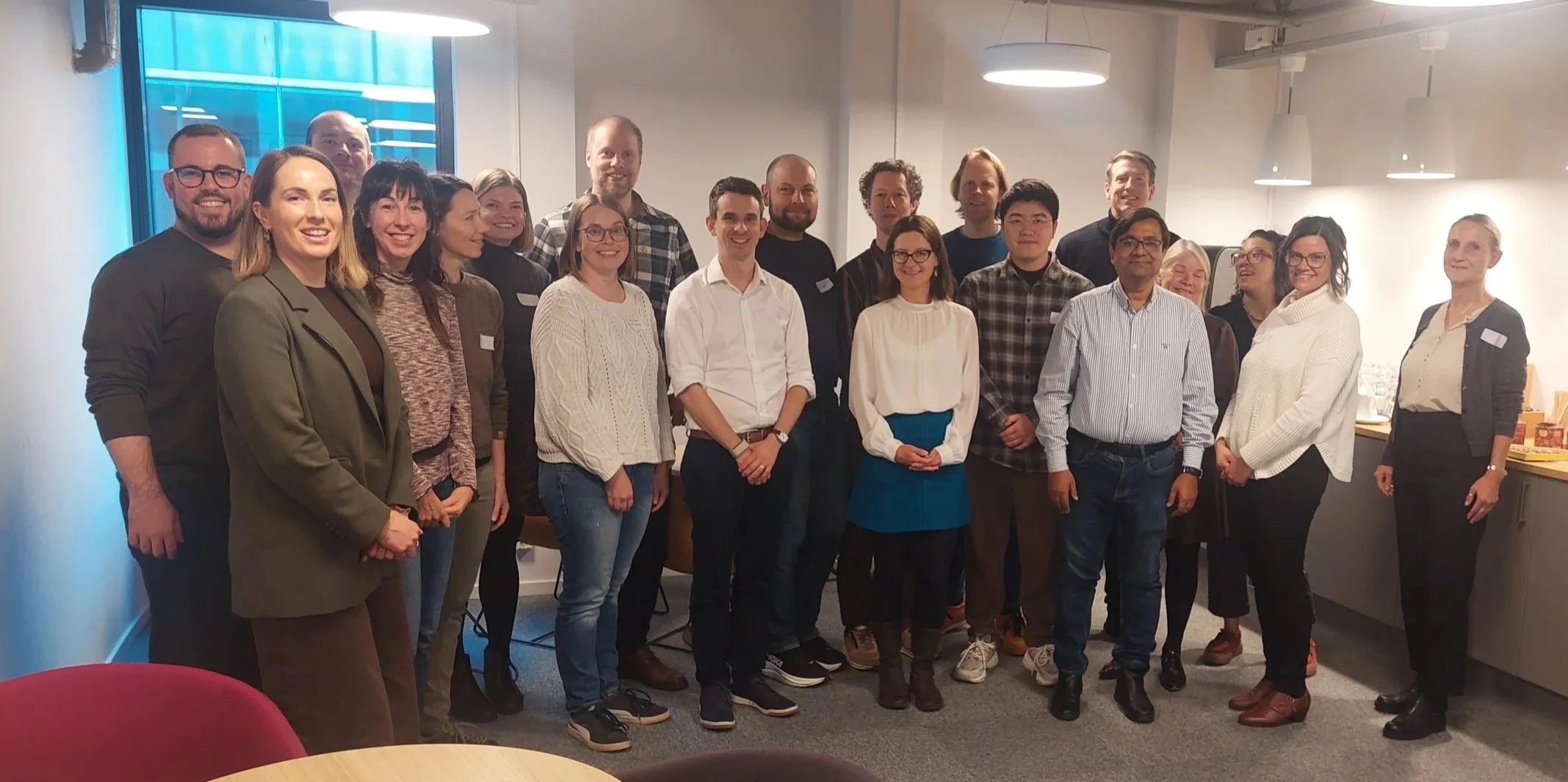
Workshop participants. Photo courtesy of Machiel Lamers.
The workshop objectives were threefold:
Increase cooperation between social scientists, meteorological institution researchers, local community representatives, and tour operators;
Explore how development trends generate a need for forecasting services in Svalbard tourism, and how forecasting services generate environmental and societal impacts;
Place Svalbard research in pan-Arctic and polar perspectives and produce a transdisciplinary research agenda around these themes.
Day one, which focused on “Mapping current and future trends,” began with four keynote presentations that outlined the perspectives of those working in forecasting as well as those using forecasting products to make decisions in the region:
Marius Jonassen (UNIS): “Observations and opportunities for improved forecasting”
Penny Wagner (MET.no): “The impact of enhanced sea ice forecasting services”
Tore Hoem (Hurtigruten, Svalbard): “Svalbard operations in the context of forecasting of sea ice- and weather-related conditions”
Leoni Dickerhoff (AECO): “Environmental forecasting needs and use from an operational context"
Participants were then invited to consider what conditions are relevant for their Arctic activities, which forecasts help with understanding this, and the impacts forecasting can have, both intended and intended. The importance of the user interface was noted, as well as the need for guidance for choosing the most appropriate information for the decision at hand, and the visibility of confidence intervals to help build trust.
In a second breakout session, drivers identified in a 2018 SALIENSEAS project scenario report (such as global economic trends, the trajectory of development in marine technologies, and regulations and policies affecting Arctic operations) were assessed for contemporary relevance. Participants noted several large shifts in the contextual landscape since 2018, including the development of AI technologies. Looking forward, elements such as climate change, technological transformation, and geopolitical landscape were all identified as factors that will directly influence future forecasting in the region.
On day two, the program continued the forward-facing focus, with discussions building on key themes that had emerged, and using these to work “Towards a common research agenda.” Three keynote presentations provided insights into both similarities and differences in forecasting in Svalbard and beyond:
Ine-Therese Pedersen (MET.no): “The impact of weather forecasting in Svalbard: A forecaster’s perspective"
Jacub Taarup (UiS, Norway): “That which attacks you: Exploring the role of the forecasting services during piteraq storms on the east coast of Greenland”
Dewan Ahsan (SDU, Denmark): “Sustainable Arctic Cruise Tourism: The Svalbard Case”
These practices and developments were then placed within the context of the upcoming International Polar Year. When invited to identify research questions and priority areas, participants returned to themes such as impacts, thresholds of risk, and the importance of trust. All questions will be collated into a conceptual paper. The workshop format also provides a model that could be replicated in other polar regions in the future.
Key take-home messages from the event include that "forecasts don’t make decisions, people do" – so considering the entire value cycle is vital. Ethical questions, such as who benefits from data collection, were also raised, with an emphasis on forecasting for the public good.
Beyond the formal presentations, the workshop functioned to support dialogue between forecasters, product users, and the tourism industry. These very human connections will continue to support improved forecasting for the region. Thank you to all the workshop presenters, and to those who joined us for the interactive discussions.