

How can we improve polar observations, data accessibility, and international collaboration ahead of the Fifth International Polar Year (IPY-5)? This was the focus of a discussion at the 2026 Arctic Circle Assembly in Reykjavík, moderated by Amanda Lynch, Chair of the World Meteorological Organization (WMO) Research Board. The session, Closing Gaps in Polar Observations & Data for IPY-5, brought together experts in weather prediction, data management, research infrastructure, policy, and international law. Clare Eayrs, the interim natural science PCAPS co-chair, was one of the invited panelists.
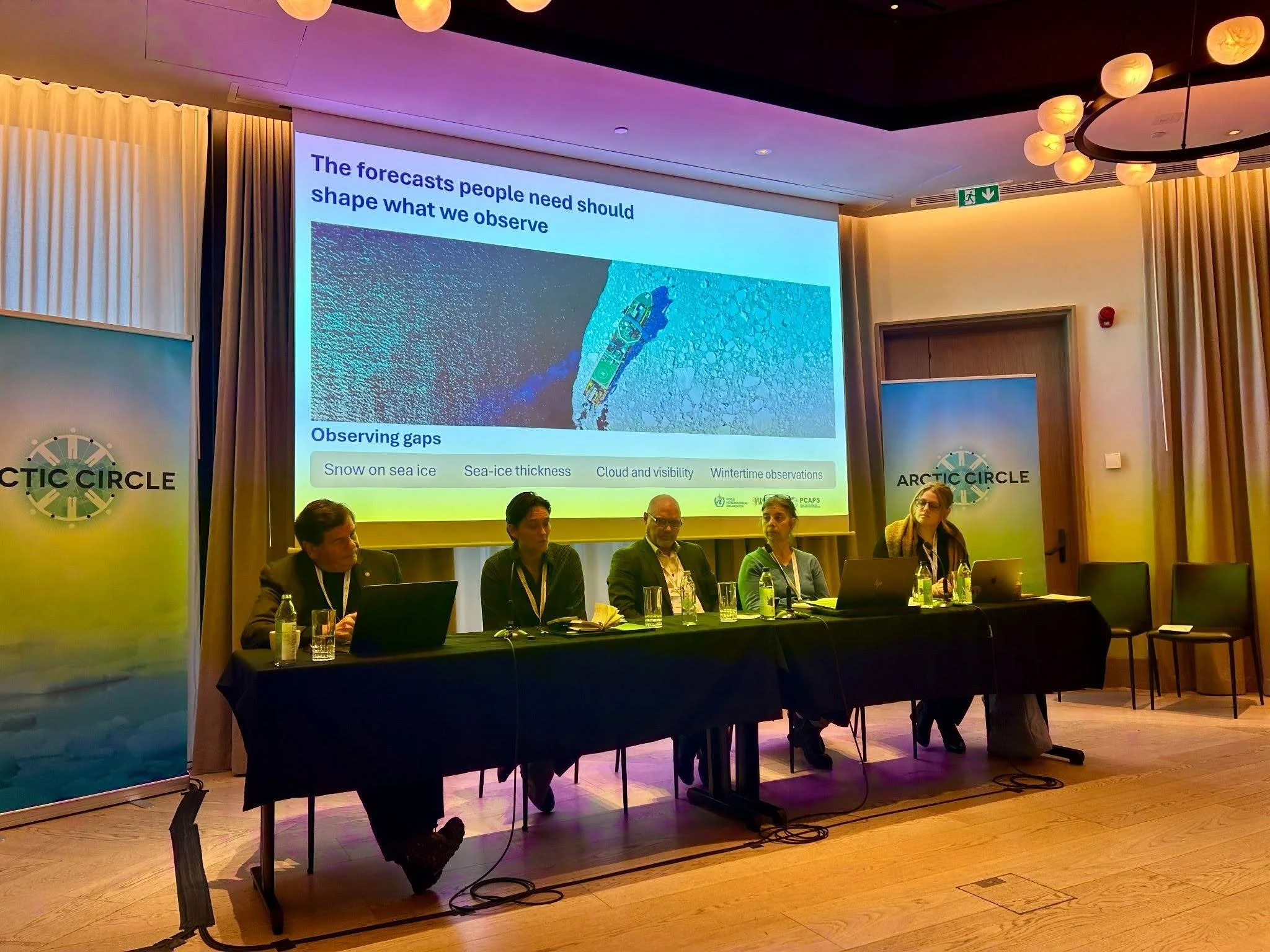
Clare Eayrs presenting on polar prediction needs and observational gaps at the 2026 Arctic Circle Assembly. Photo credit: Maria Luisa Rocha
One of the main messages from the session was that collecting more observations is only part of the challenge in improving polar observations. We also need to make sure that data can be found, trusted, shared responsibly, and used by the people who depend on it.
Start with the forecasts people need
As Clare pointed out, improving polar prediction starts with understanding what users actually need. Major observational gaps remain in polar regions, particularly in sea ice thickness, snow on sea ice, cloud cover, visibility, and wintertime conditions. These observations are important for understanding environmental changes and improving weather and climate predictions.
Clare emphasized that the forecasts people need should help determine what we observe. This means considering which measurements would make the greatest difference to prediction and how that information could support decisions.
Discussions with forecast users have also shown that access to existing data remains a problem. Sometimes the information is available, but people cannot easily find it or obtain it in a format that is useful for their work. Improving polar prediction therefore involves both filling observational gaps and making better use of the data we already collect.
Clare also discussed the growing use of artificial intelligence (AI) in environmental prediction and why observations are becoming even more important.
AI models depend on observations for training and improvement, but they also need independent data to evaluate how well their predictions perform. Observations used to train a model cannot provide a fully independent assessment of its skill. This makes it important to plan evaluation datasets from the beginning and keep them separate from model development.
There are also questions about uncertainty and how to understand the predictions these models produce. Knowing how well a model performs, where its limitations are, and how much confidence we can place in its forecasts is particularly important when that information supports decisions.
Clare's presentation connected these challenges to the broader goals of PCAPS. Improving polar prediction requires sustained observations, cooperation among the institutions responsible for collecting and maintaining data, and continued communication with the communities and decision makers who use forecast information.
Making polar observations easier to find and use
Other speakers discussed how observations are managed, shared, and used after they are collected. Chantelle Verhey, a PhD researcher at Carleton University and Co-Chair of the Arctic Data Committee, highlighted the challenges of finding and sharing Arctic datasets. Data are often scattered across different repositories, making it difficult to locate the information needed for research or even identify its original source.
She discussed efforts to improve polar data discovery and management, while emphasizing the importance of Indigenous data sovereignty and the FAIR and CARE principles. These considerations are particularly important as we work toward more coordinated data systems. Improving access to scientific information also requires respecting the rights of Indigenous Peoples and the communities connected to that information.
Chantelle also introduced the idea of moving from data to action. Scientific observations have value beyond the research papers they produce. How we share results, communicate findings, and make information accessible can influence whether that knowledge reaches the people who need it.
Petra Heil, Director of Science at the British Antarctic Survey (BAS), approached this question from the perspective of data provenance, or the ability to trace where scientific information comes from and how it has been processed. She described the different steps involved in turning field measurements into information that can support policy decisions. Observations are collected, processed, combined with other data, and used in scientific analyses. Keeping clear records throughout this process helps others understand and verify the results.
Without traceable information about the origin and processing of data, scientific findings may be difficult to verify or use in international policy discussions. Petra also emphasized the importance of working with decision makers throughout the research process. For IPY-5, this means thinking about how scientific information will be used from the beginning, including the needs of the people and communities who depend on it.
Heikki Lihavainen, Director of the Svalbard Integrated Arctic Earth Observing System (SIOS), presented a practical example of how coordinated observing systems can address some of these challenges. SIOS brings together 29 research institutions to coordinate environmental monitoring in the high Arctic. It combines observations from field instruments, satellites, research vessels, aircraft, and other platforms.
In addition to improving access to data, SIOS helps researchers access scientific infrastructure in Svalbard, including field facilities and remote observing systems. This coordination makes it easier for institutions to share resources and build on observations that are already being collected.
Together, these presentations showed how data management, documentation, and research infrastructure contribute to making polar observations more useful and accessible.
The importance of international cooperation
International collaboration was another important part of the discussion. Charles Norchi, Benjamin Thompson Professor of Law and Director of the Center for Oceans and Coastal Law at the University of Maine School of Law, brought a legal perspective, discussing how international law, coastal state jurisdiction, and geopolitics affect scientific research and data sharing in polar regions.
He introduced the framework established by the United Nations Convention on the Law of the Sea (UNCLOS), particularly Part XIII, which addresses marine scientific research. While states have the right to conduct scientific research, activities within coastal states' maritime zones are subject to specific rights, responsibilities, and authorization requirements.
Charles also discussed the challenges of sharing scientific data and conducting research across national boundaries, particularly as geopolitical relationships change.
Polar research often depends on international cooperation. Observing systems, scientific expeditions, and long-term monitoring programs involve researchers and institutions from several countries. Legal requirements and political tensions can affect these collaborations and the availability of scientific information.
As we prepare for IPY-5, maintaining cooperation and supporting responsible data sharing will be important for ensuring that observations remain available and useful beyond individual research projects.
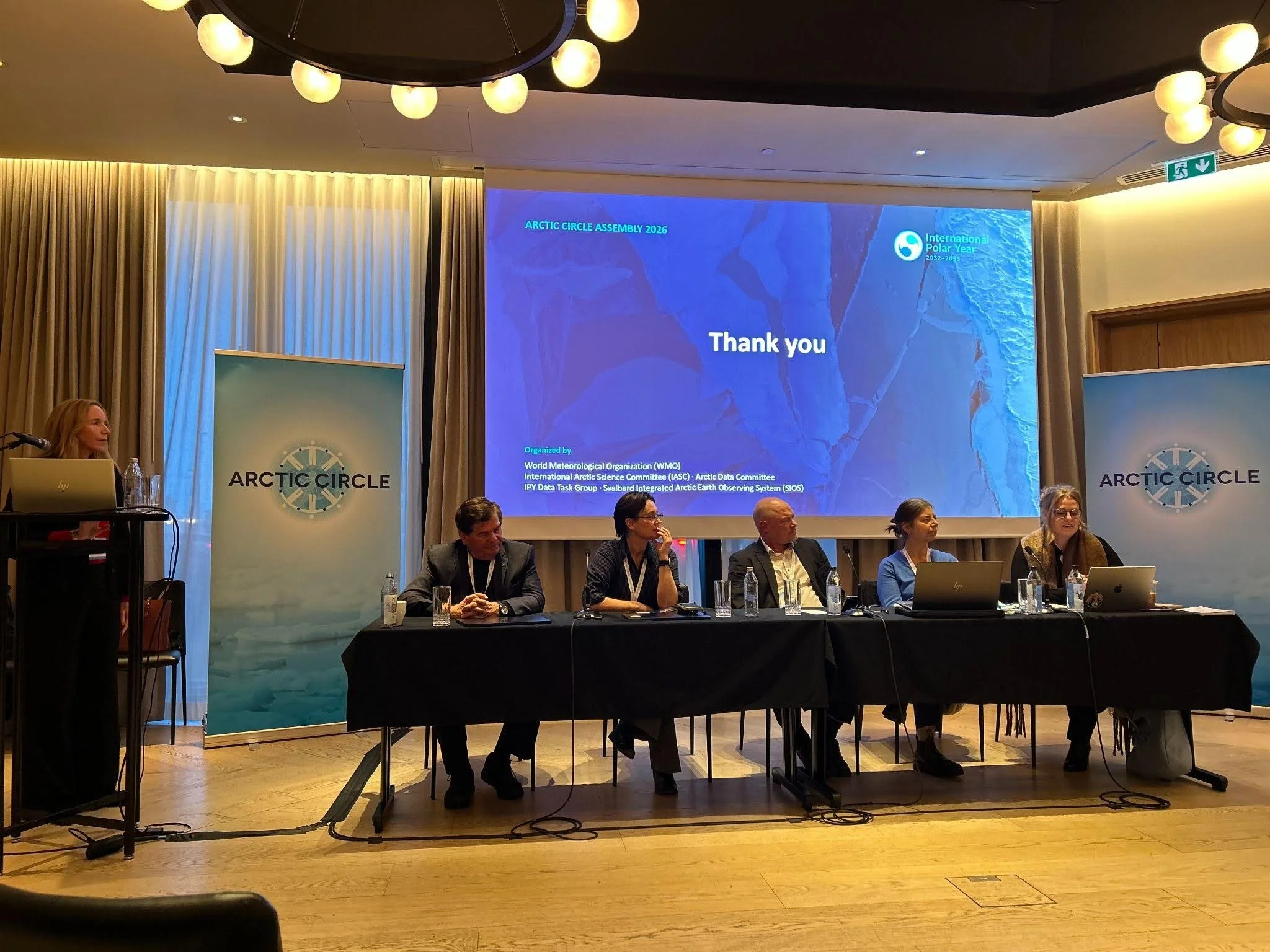
Panelists during the question and answer discussion at the 2026 Arctic Circle Assembly in Reykjavík. Photo credit: Jasper Perlis
Looking ahead to IPY-5
The Fifth International Polar Year (IPY-5), planned for 2032–2033, will bring together researchers, institutions, governments, Indigenous Peoples, and communities to improve our understanding of the Arctic and Antarctic.
What I took from the session is that preparing for IPY-5 means thinking about the entire process, from identifying observational gaps to making sure that the information collected can be found, trusted, shared responsibly, and used. It also means understanding which observations matter most for prediction and working more closely with the communities and decision makers who need this information.
This is closely connected to the work of PCAPS. Through its Horizon Scan activities, the project is gathering input from researchers, forecast users, and other stakeholders to identify priorities for future polar prediction research and services. The PCAPS Horizon Scan Stage 2 survey offers an opportunity to contribute to this process and help identify where improvements in polar prediction are most needed.
Preparations for IPY-5 are already moving forward. Global coordination will be based in Tromsø, Norway, where an international consortium led by UiT - The Arctic University of Norway, together with the Norwegian Polar Institute and partners in the Republic of Korea and Chile, will host the IPY-5 International Coordination Office. The office is expected to begin its work in early 2027, supporting international planning and collaboration ahead of 2032–2033.
The discussion in Reykjavík was a reminder of how much these efforts depend on one another. Improving observations, developing better prediction systems, making scientific data accessible, and maintaining international cooperation are all part of preparing for the next International Polar Year.
This blog was written by Maria Luisa Rocha, PhD candidate in the Department of Earth, Environmental and Planetary Sciences at Brown University, USA. Her research focuses on Arctic weather hazards, particularly polar lows, and how they affect maritime safety and shipping risks.
Many thanks to Narelle van der Wel from WMO for coordinating the session, Amanda Lynch for moderating, and all the panelists for sharing their work and perspectives. Thanks also to Jasper Perlis for helping with the photographs.