

Advancing visibility forecasting on the icebreaker Oden
Members of the meteorology team from the graduate school on the Canada–Sweden Arctic Ocean campaign 2025 (AO2025) recently came together in Leeds for a focused collaborative writing workshop. The goal of the workshop was to advance a joint project on visibility forecasting, building on experiences from the field and ongoing work within the WWRP PCAPS Processes Task Team.
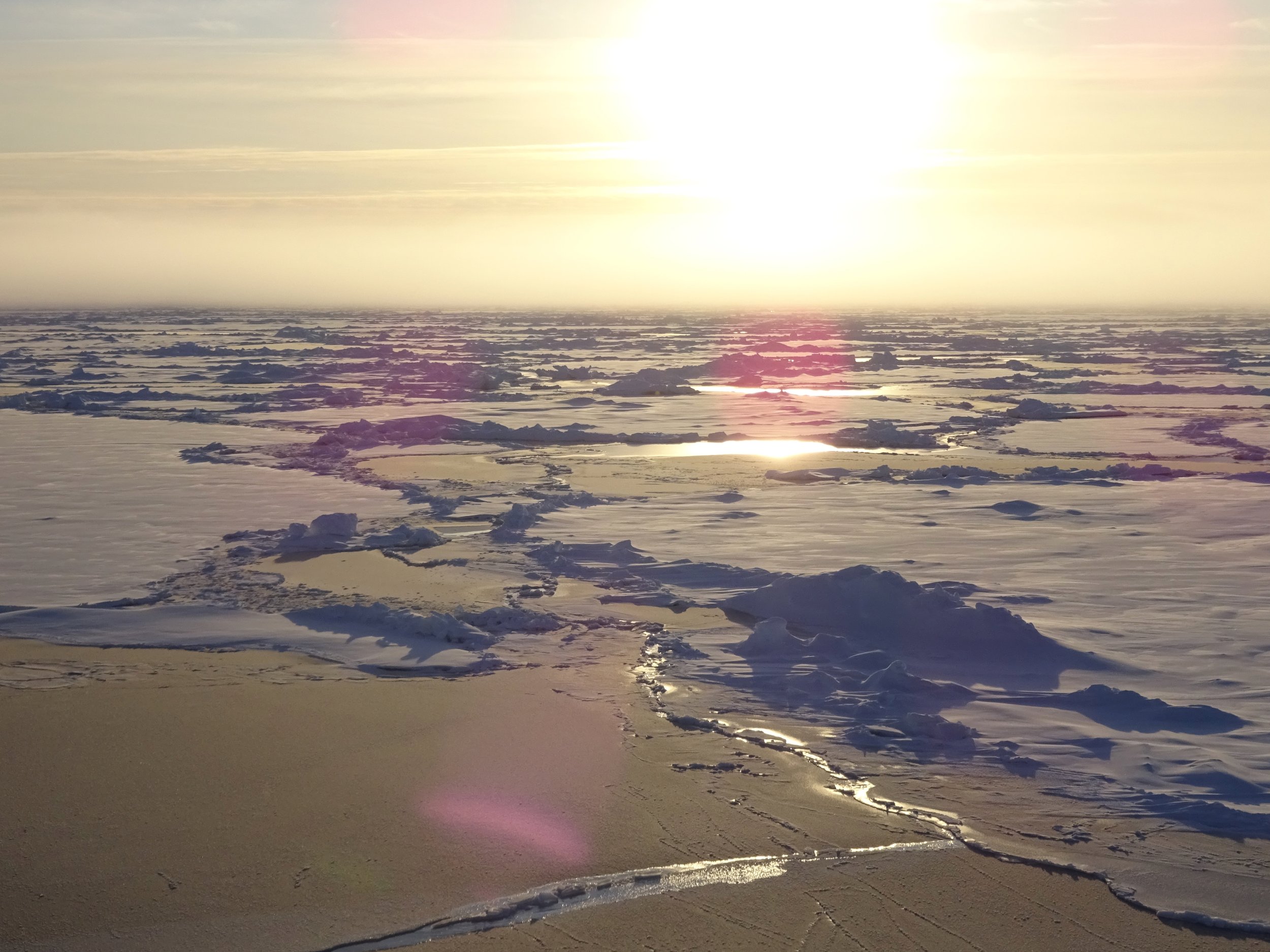
A bank of fog above the ice during AO2025. Photo credit: Luise Schulte
During AO2025, the meteorology team worked aboard the icebreaker Oden, where accurate visibility forecasts were critical for daily helicopter operations. The helicopter supported much of the campaign’s interdisciplinary science, enabling the sea‑ice, ocean, and biogeochemistry teams to reach measurement sites and collect samples. Fog can lead to icing of the helicopter and hinder polar-bear guarding, which is essential for any work on the sea ice.
To better understand how visibility forecasts are produced and used in an operational setting, the team engaged closely with the on‑board forecaster, Nicke Juuso. These discussions focused on the challenges of forecasting visibility in Arctic conditions and on the practical decision‑making involved in supporting aviation operations. Numerical weather prediction models struggle to represent many of the small‑scale processes that govern fog and low‑visibility events, including turbulent mixing in stable boundary layers and the formation of low‑level clouds and fog. Improving the representation of such processes is a key focus of the PCAPS Processes Task Team.
The project evaluates model output explicitly from the perspective of aviation‑relevant visibility prediction. Visibility events are defined using thresholds that are directly relevant for helicopter flight decisions in the Central Arctic, and forecast performance is assessed in relation to those thresholds. A central objective is to explore which verification metrics are most informative for this specific application, and to clarify what aspects of forecast quality these metrics emphasise.
In parallel, the human forecasts issued during AO2025, in the form of Terminal Aerodrome Forecasts (TAFs), are evaluated using the same threshold‑based framework. Applying a consistent evaluation approach allows for a direct comparison between model forecasts and forecaster performance.
The project contributes to both short‑ and long‑term progress by providing metrics to assess future model improvements for visibility forecasting, while exploring alternative ways to diagnose visibility using additional model variables, with the potential to provide more useful guidance to forecasters even before major model developments are implemented.
An important motivation for this work is to close the forecast value cycle by feeding insights back into future operations. The results may provide the meteorology team of subsequent cruises with new visibility diagnostics to compare against on‑board observations, or highlight observational gaps that limited the present analysis. Engagement with future expeditions will help test whether the proposed approaches stand up to operational reality.
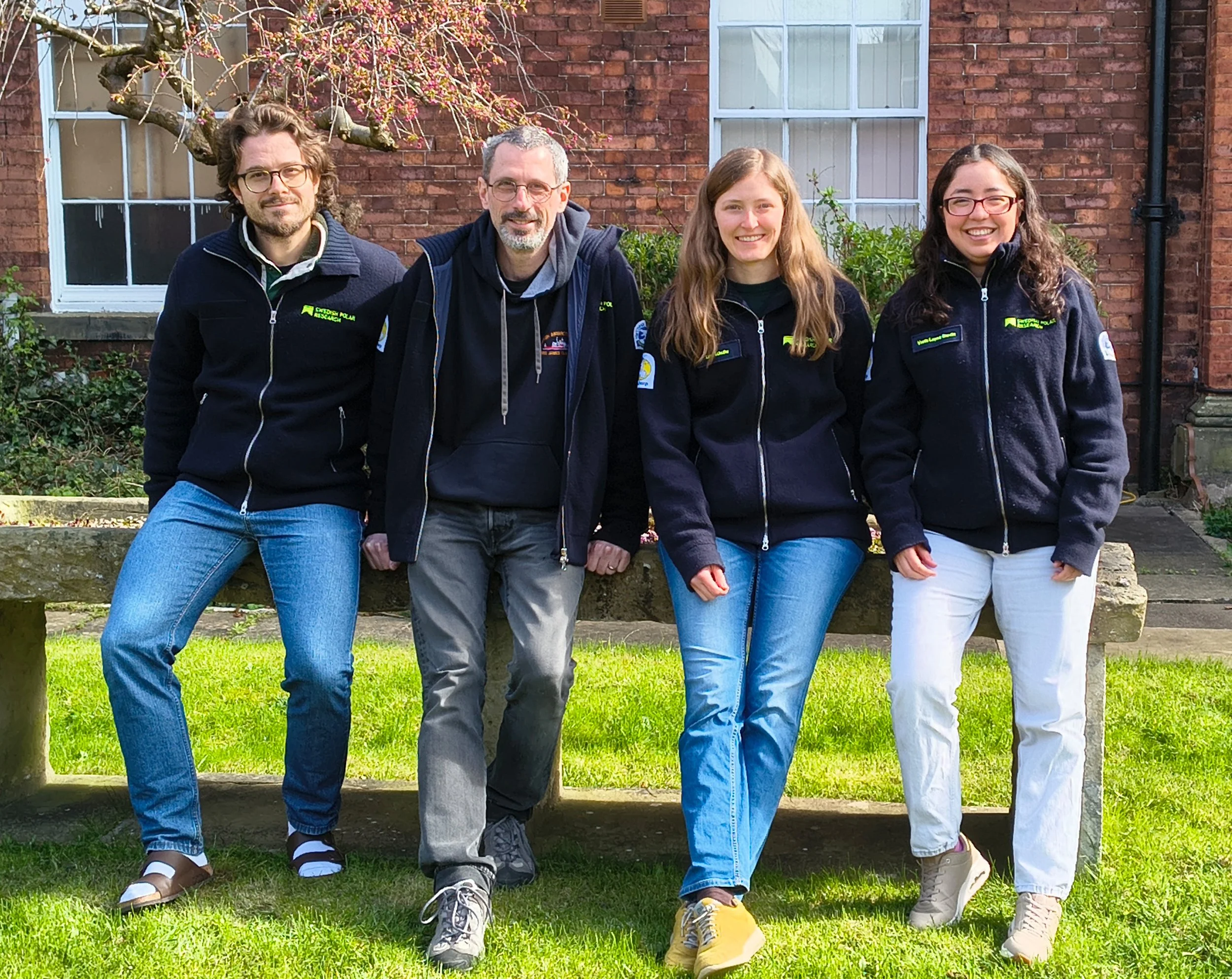
Workshop participants in Leeds. Photo courtesy of Luise Schulte
While the Leeds workshop was attended in person by the participants in the AO2025 cruise, the project team is larger. Discussions with colleagues from other disciplines took place before the workshop and will continue after it. The workshop provided valuable opportunities for focused collaboration, refinement of the main analyses, and initiation of the joint writing process.
Those with an interest in Arctic operations or visibility forecasting more broadly are encouraged to keep an eye out for the forthcoming study. By combining operational experience, model evaluation, and process understanding, the project aims to contribute new insights into one of the most challenging aspects of polar weather forecasting.
The team gratefully acknowledges the support of the World Meteorological Organization's World Weather Research Programme (WWRP). This workshop was undertaken with the financial support of the Government of Canada through the federal Department of Environment and Climate Change.