

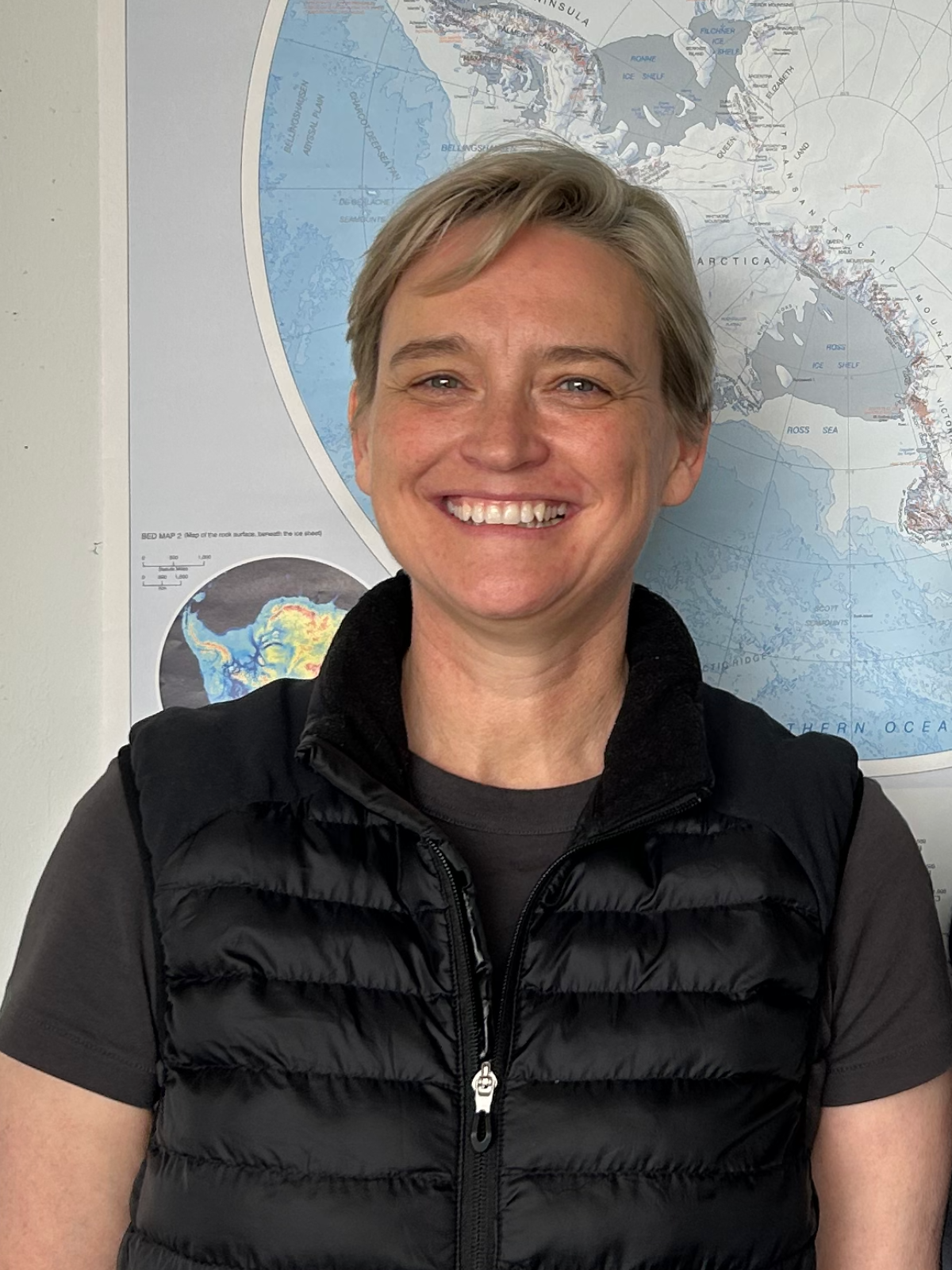
Dr. Clare Eayrs
she/her
Affiliated Research Scientist
Environmental Fluid Dynamics Laboratory, New York University
United States (based in Abu Dhabi, UAE)
Clare is the Interim PCAPS Natural Science Co-chair, building on her experience as a member of the PCAPS Steering Group and of the Steering Group of the WMO's Polar Prediction Project (PPP), which concluded in 2022. Within PCAPS she co-chairs the ORCAS Task Team on Observational Requirements in the Context of AI Prediction Systems, which also runs as SCOR Working Group 173.
Clare holds a BSc (Hons) in Environmental Sciences and a PhD in Coastal Processes from the University of East Anglia (UK), and an MSc in Environmental Coastal Engineering from the University of Southampton (UK). She led the ecosystem modelling team at the Centre for Environment, Fisheries and Aquaculture Science (UK) and worked as an ecosystem modeller at the European Commission's Joint Research Centre (Italy) before turning to polar research, first as a research scientist at New York University Abu Dhabi and then at the Korea Polar Research Institute. She co-chairs the Scientific Committee on Antarctic Research's AntClimNow (Near-Term Variability and Prediction of the Antarctic Climate System) programme and is a member of the leadership team of the Sea Ice Model Intercomparison Project (SIMIP). She is Sea Ice Topic Editor for Earth System Science Data and edited the sea ice section of Elsevier's Comprehensive Cryospheric Science and Environmental Change.
Clare's research focuses on the interaction between ice, the ocean and the atmosphere, and on how changes in the cryosphere affect the wider climate system. She has tested these ideas in the field, from wave buoys and flux stations on floes in the winter marginal ice zone to instruments on and beneath West Antarctic ice shelves, including multi-year sub-ice-shelf observations recovered from the Amundsen Sea.
Learn more about Clare and her work in PCAPS here.
Research interests:
Antarctic sea ice variability │ ice--ocean interaction and ice shelf stability │ polar observing system design